
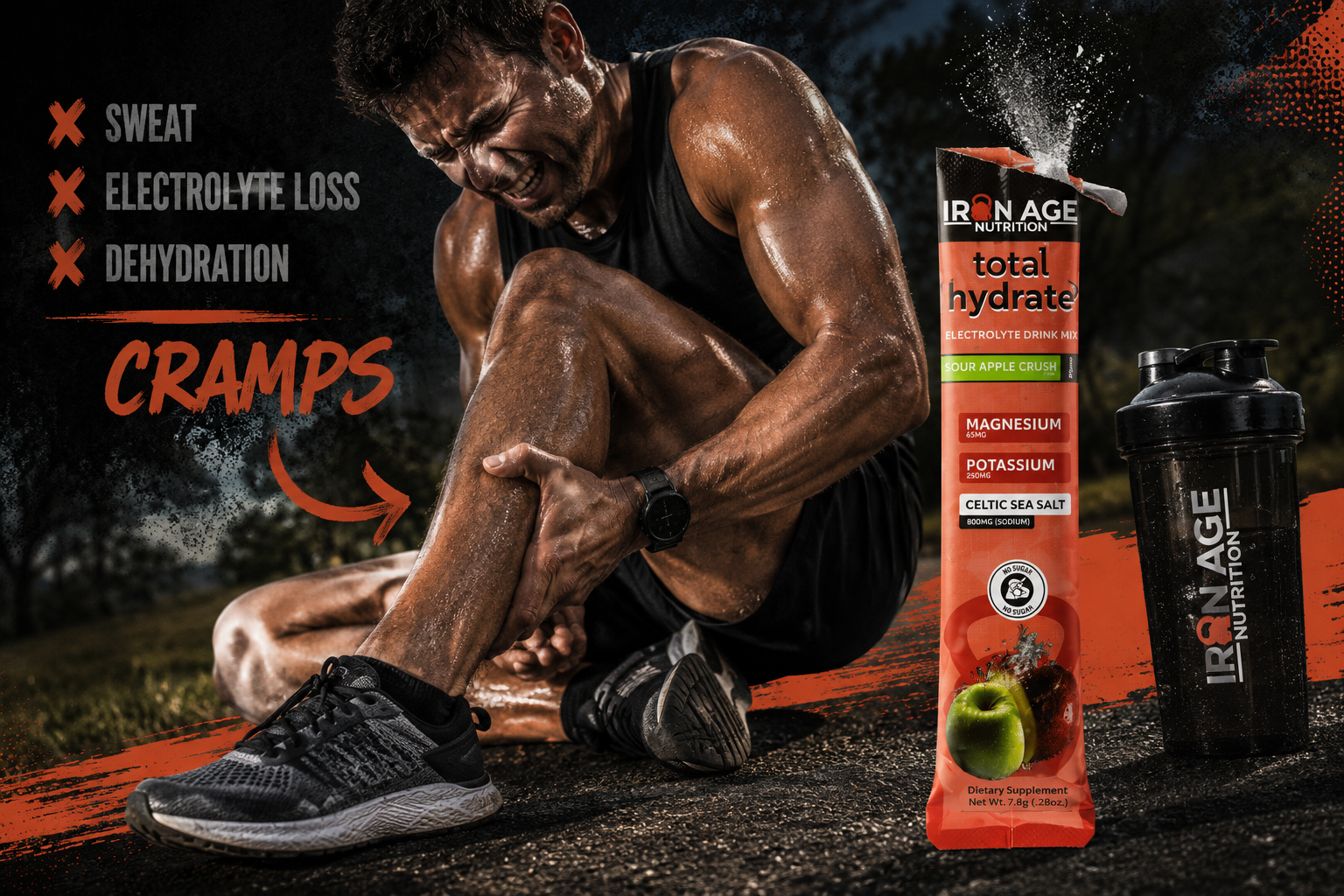
Recurring muscle cramps usually come from one of two things: neuromuscular fatigue (overworked, tired muscles misfiring) or fluid and electrolyte loss from heavy sweating—often both at once. The science is genuinely mixed. What reliably helps is a mix of not overreaching, staying hydrated with enough sodium, and stretching the cramping muscle.
If you keep seizing up mid-workout or waking at 2 a.m. with a knotted calf, you want a straight answer. Here it is: nobody has fully solved muscle cramps, and any brand that claims a guaranteed cure is selling you something. What follows is what the research actually shows and what is worth trying.
What causes exercise-associated muscle cramps?
Exercise-associated muscle cramps (EAMC) are sudden, involuntary, painful contractions during or shortly after exercise. There are two leading theories, and the honest answer is that both likely play a role depending on the person and the situation.
The neuromuscular fatigue theory. This is currently the more strongly supported explanation. The idea: when a muscle is fatigued, the nerve signals controlling it get imbalanced—excitatory signals ramp up while inhibitory ones drop—leaving the muscle prone to firing on its own. Research by Schwellnus and colleagues, including a widely cited review on the cause of EAMC, argues that altered neuromuscular control, not dehydration, is the primary driver. It explains why cramps often hit late in a race, in the muscles you have worked hardest.
The dehydration and electrolyte theory. The older, more intuitive explanation: sweating drains fluid and sodium, disturbing the balance around muscle and nerve tissue and triggering cramps. A review on muscle cramping during exercise notes that this theory is supported by observations of "salty sweaters" and by athletes who cramp less when sodium is replaced—but large controlled studies have not consistently confirmed it.
The practical read: fatigue sets the stage, and heavy fluid and sodium losses can make things worse for some people. That is why a smart prevention strategy addresses both.
Why do I get muscle cramps at night?
Nocturnal leg cramps are a different animal from exercise cramps, and they are common—especially with age. They usually strike the calf or foot during sleep or rest, not during activity.
The exact cause is often unclear. Contributing factors can include muscle fatigue, prolonged sitting, certain positions that shorten the calf, dehydration, pregnancy, and some medications. Because night cramps overlap with several medical conditions, persistent or severe ones deserve a conversation with your doctor rather than a supplement guess.
Who is most prone to muscle cramps?
Some people cramp far more than others. You are at higher risk if you:
- Push into new intensity or duration your muscles are not conditioned for
- Are a heavy or "salty" sweater (visible salt crust on skin or clothes)
- Exercise in heat and humidity without adequate hydration
- Have a personal or family history of cramping
- Are older—night cramps become more frequent with age
- Are pregnant
- Ramp up training volume quickly
Notice the top of the list is about doing too much, too soon. Conditioning is a real cramp-prevention tool, even if it is not the one people want to hear.
Do electrolytes actually help with cramps?
Here is where we stay honest. The evidence is mixed, and it differs by mineral.
Sodium. This has the most support for exercise cramps, especially in heavy sweaters. An evidence-based review of EAMC discusses sodium replacement as a reasonable prevention strategy for athletes with high sweat sodium losses. It is not a guarantee, but for someone losing a lot of salt in the heat, replacing sodium is one of the more logical levers to pull.
Magnesium. Popular for cramps, but the evidence is underwhelming. Controlled trials in the general population and in older adults with night cramps have largely failed to show that magnesium supplements reduce cramp frequency. Magnesium matters for overall muscle and nerve function, and correcting a genuine deficiency makes sense—but as a targeted cramp fix, do not expect much.
Potassium. Important for muscle function, but frank potassium deficiency is an uncommon cause of ordinary exercise cramps. Replacing it as part of balanced hydration is sensible; treating it as a standalone cramp cure is not well supported.
| Approach | Evidence for cramps | Bottom line |
|---|---|---|
| Sodium replacement | Moderate, strongest in salty/heavy sweaters | Worth prioritizing if you sweat heavily in heat |
| Magnesium | Weak for cramp prevention | Useful for overall function; not a reliable cramp fix |
| Potassium | Limited as a standalone factor | Include in balanced hydration, not as a cure |
| Stretching | Good for stopping an active cramp | First move when a cramp hits |
| Conditioning / pacing | Consistent with fatigue theory | Build up gradually; do not outrun your fitness |
What hydration strategy actually helps?
Even though dehydration is not proven to be the sole cause, sensible hydration is still one of the few levers you control—and it directly addresses the salty-sweater subgroup that does seem to benefit from sodium.
A reasonable approach for cramp-prone athletes:
- Start sessions already hydrated rather than trying to catch up mid-workout.
- On long or hot sessions (roughly 60+ minutes), drink to thirst and include sodium instead of relying on plain water.
- If you finish caked in salt, lean toward more sodium replacement, not less.
- Do not overdrink plain water for hours—that dilutes sodium and does not prevent cramps.
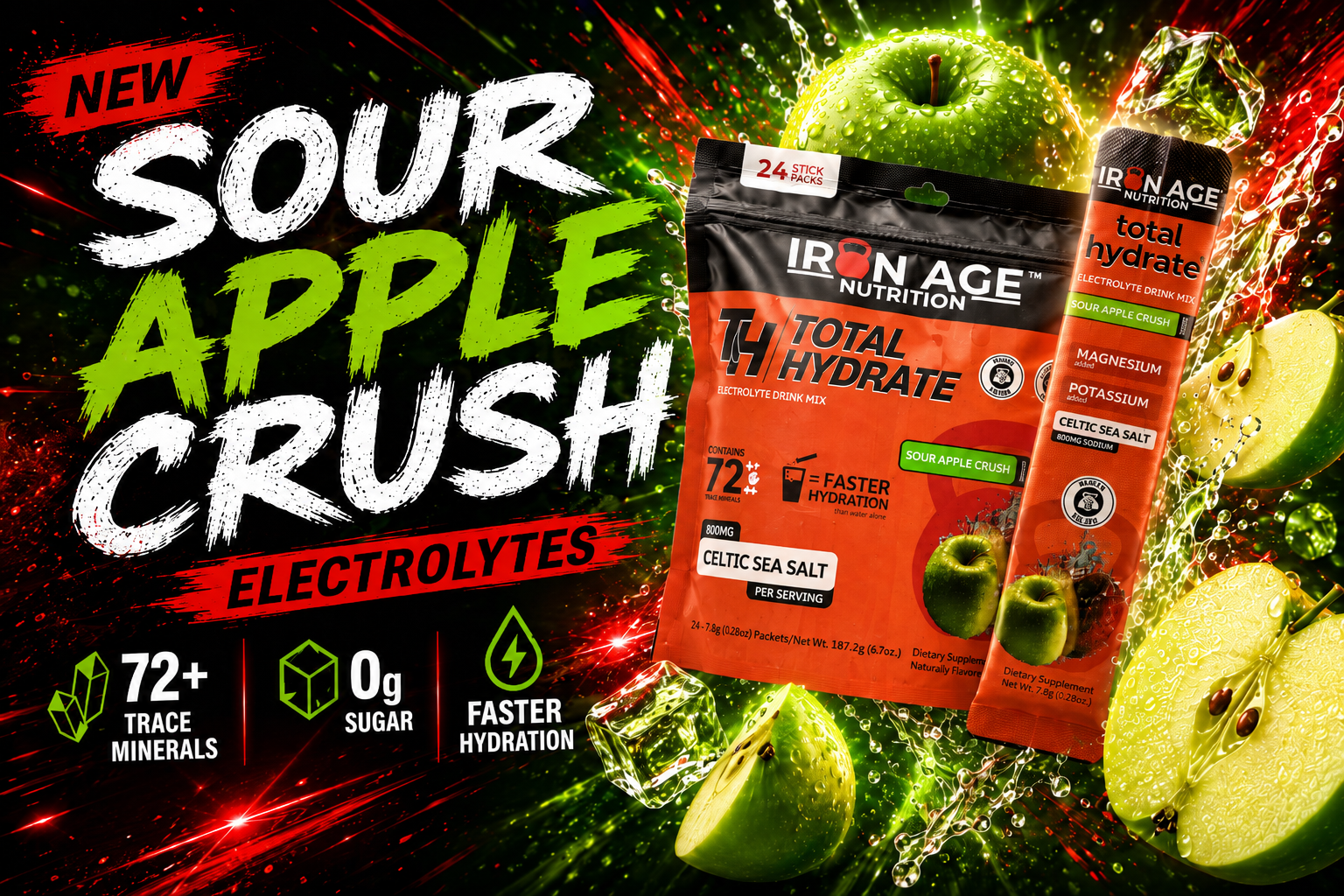
If you sweat heavily, a clean electrolyte with a meaningful sodium dose is a practical tool here. A formula built on a Celtic Sea Salt base like Total Hydrate™ supplies sodium plus more than 72 naturally occurring trace minerals without the sugar and artificial sweeteners that pad most "sports" drinks. It will not out-muscle bad pacing, but for a salty sweater it covers the electrolyte side of the equation.
How do you stop a cramp once it starts?
When a muscle locks up mid-session, the fastest reliable fix is passive stretching—gently lengthening the cramping muscle and holding until it releases. For a calf cramp, straighten the leg and pull your toes toward your shin. Light massage and gentle movement afterward help too.
This works because stretching increases tension in the tendon, which triggers a reflex that tells the overactive muscle to relax—consistent with the neuromuscular fatigue theory. It is more dependable in the moment than reaching for a supplement, which cannot act fast enough to break an active cramp.
When should you see a doctor about muscle cramps?
Most exercise and occasional night cramps are harmless nuisances. But see a healthcare provider if your cramps are:
- Frequent, severe, or getting worse over time
- Not linked to exercise and disrupting your sleep regularly
- Accompanied by swelling, redness, muscle weakness, or skin changes
- Present alongside numbness or other neurological symptoms
- Possibly related to a medication you are taking
Persistent cramping can occasionally signal an underlying condition, so it is worth ruling out rather than guessing. This article is educational and not a substitute for medical advice.
Key takeaways
- Muscle cramps most likely stem from neuromuscular fatigue, fluid and electrolyte loss, or both—the science is not settled.
- Neuromuscular fatigue is currently the better-supported theory for exercise cramps.
- Sodium replacement has the most evidence, especially for heavy, salty sweaters; magnesium and potassium are weaker as targeted cramp fixes.
- Passive stretching is the fastest way to stop an active cramp.
- Build fitness gradually, pace smartly, and hydrate with enough sodium on long or hot days.
- See a doctor for cramps that are frequent, severe, non-exercise, or paired with other symptoms.
Frequently asked questions
Are muscle cramps always caused by dehydration?
No. Dehydration and electrolyte loss can contribute, particularly in heavy sweaters, but they are not proven to be the sole or even primary cause. Current research points more toward neuromuscular fatigue—tired, overworked muscles misfiring. Most cramps involve a combination, which is why pacing, conditioning, and hydration all matter.
Does magnesium stop muscle cramps?
For most people, the evidence says no. Controlled trials on magnesium supplements for cramps, including night cramps in older adults, have generally shown little benefit. Magnesium is still essential for muscle and nerve function, and fixing a real deficiency is worthwhile—but do not expect magnesium alone to reliably prevent cramps.
Why do I get calf cramps at night?
Nocturnal calf cramps are common and the cause is often unclear. Contributing factors can include muscle fatigue, prolonged sitting, sleeping positions that shorten the calf, dehydration, pregnancy, aging, and certain medications. Gentle stretching before bed may help. If night cramps are frequent or severe, see your doctor, since they can overlap with medical conditions.
What is the fastest way to get rid of a cramp?
Passive stretching. Gently lengthen and hold the cramping muscle until it releases—for a calf, straighten your leg and pull your toes toward your shin. Follow with light massage and easy movement. Supplements cannot break an active cramp quickly enough, so stretching is your first move in the moment.
Can taking electrolytes prevent cramps during long workouts?
For heavy or salty sweaters, replacing sodium during long, hot efforts is one of the more logical prevention strategies, and some athletes cramp less when they do it. It is not guaranteed for everyone. Pair electrolytes with sensible pacing and conditioning rather than relying on them as a standalone fix.
Should I worry if I cramp during every workout?
Frequent cramping is worth investigating. First, check the basics: are you ramping up too fast, under-hydrating, or sweating out a lot of salt without replacing it? Adjust those and see if it improves. If cramps persist despite sensible training and hydration, or come with other symptoms, talk to a healthcare provider.
Share:
How Much Protein Do You Actually Need to Build Muscle?
Best Electrolyte Brands for Hydration During Long Workouts