
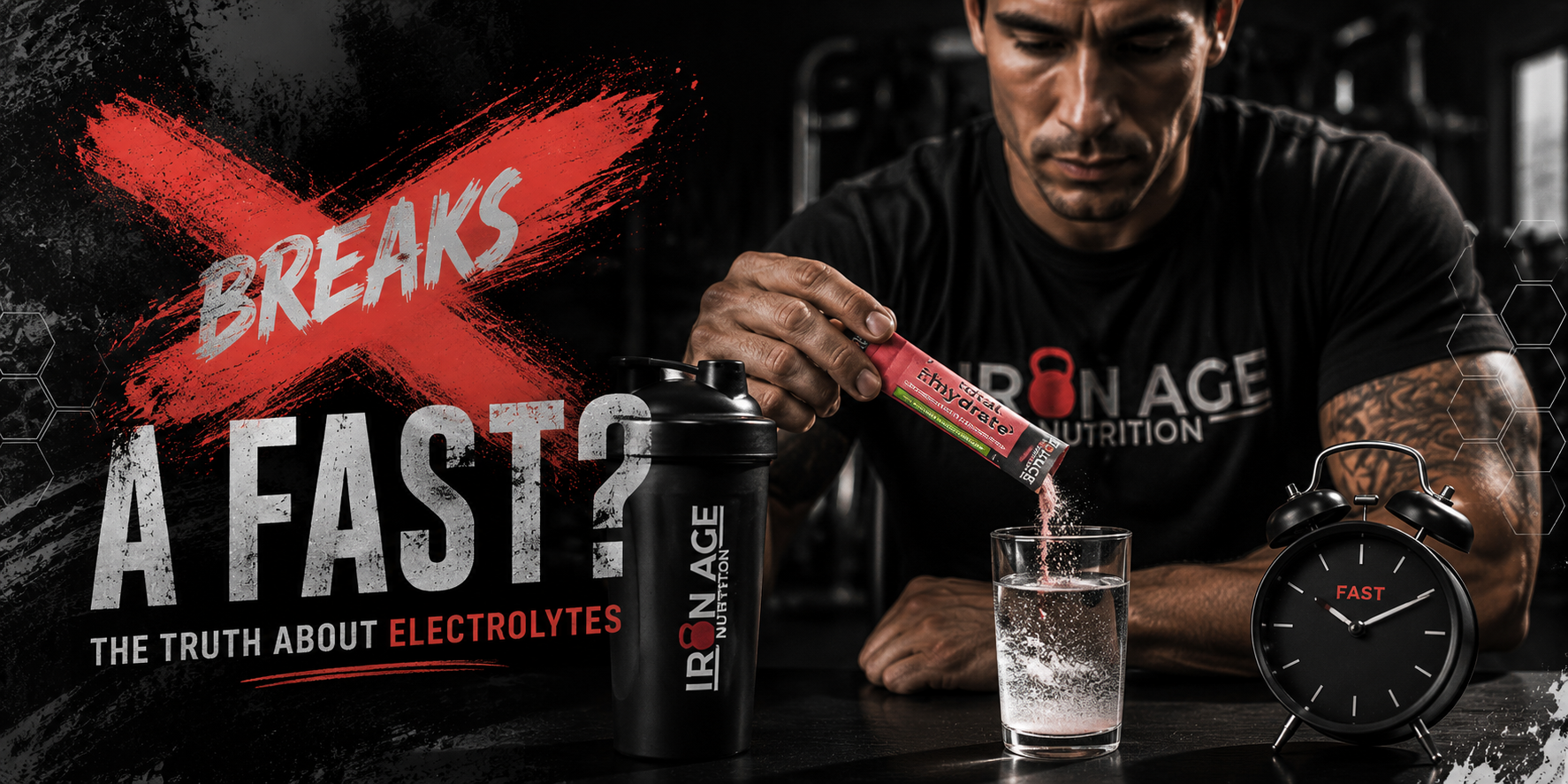
Sugar-free electrolytes generally do not break a fast. Whether something breaks your fast depends on your goal. Plain sodium, potassium, and magnesium have effectively no calories and do not spike insulin, so they preserve fat-burning and autophagy. What breaks a fast is sugar, sweeteners that trigger insulin, and meaningful calories, none of which belong in a clean electrolyte mix.
Here is the part most people miss: during a fast, you need electrolytes more, not less. Low insulin makes your kidneys dump sodium, and that loss drives most "fasting" side effects people blame on the fast itself.
What does "breaking a fast" actually mean?
There is no single definition, because people fast for different reasons. What counts as "breaking" it depends entirely on which benefit you are chasing.
- Fasting for insulin control / metabolic health: anything that spikes insulin breaks the fast. That means sugar and, for some people, certain sweeteners.
- Fasting for autophagy (cellular cleanup): meaningful protein and calories break it, because nutrients switch off the "recycling" state. According to the Cleveland Clinic, fasting deprives cells of nutrients and forces them to repurpose their own components, and animal research suggests autophagy may ramp up between 24 and 48 hours.
- Fasting for calorie restriction / weight management: calories are what matter, full stop.
Pure electrolytes fail to trigger any of these mechanisms. They contribute no meaningful calories, no protein, and no insulin response. That is why they sit comfortably inside almost every style of fast.
Why don't sugar-free electrolytes break a fast?
A clean electrolyte mix is essentially minerals dissolved in water: sodium, potassium, magnesium, chloride, and trace minerals. Minerals are not a fuel source. Your body does not metabolize sodium for energy the way it metabolizes glucose, so there is no insulin release and no calorie load to interrupt fat oxidation or autophagy.
The problem is never the electrolytes. It is what gets added to them. Many "sports" hydration products are loaded with sugar or maltodextrin to improve taste and provide fuel for endurance athletes, and that added sugar is exactly what spikes insulin and ends a fast.
Why do electrolytes matter MORE while fasting?
When you eat carbohydrates, insulin rises and signals your kidneys to hold on to sodium. When you fast, insulin stays low, and the reverse happens: your kidneys excrete more sodium and water. This "natriuresis of fasting" is well documented (fasting-induced natriuresis review, PMC), and insulin's sodium-retaining effect is equally established (insulin and renal sodium handling, PMC).
The result: the longer you fast, the more sodium you shed. And when sodium drops, potassium and magnesium balance often follow. That mineral loss is the real cause of the headaches, fatigue, brain fog, muscle cramps, and irritability people lump together as "keto flu" or "fasting fatigue." It overlaps heavily with a low-carb transition for the same reason: low insulin, high sodium loss.
Replacing electrolytes does not break your fast. It makes fasting sustainable and safer, and often erases the symptoms people assume are just part of the deal. This is the same reason a clean mineral source matters day to day, which we cover in why Celtic Sea Salt is a superior clean source of essential minerals.
What breaks a fast and what doesn't?
Use your fasting goal to read this table. Something that is fine for a weight-loss fast might still matter for a strict autophagy fast.
| Item | Insulin fast | Autophagy fast | Calorie fast |
|---|---|---|---|
| Water | Does not break | Does not break | Does not break |
| Sugar-free electrolytes (plain minerals) | Does not break | Does not break | Does not break |
| Black coffee / plain tea | Does not break | Does not break (may support it) | Does not break |
| Electrolytes with sugar or maltodextrin | Breaks | Breaks | Breaks |
| BCAAs / protein / collagen | Likely breaks | Breaks | Breaks |
| Cream, milk, "bulletproof" add-ins | Breaks (protein/carbs) | Breaks | Breaks (calories) |
| Artificial sweeteners | Possibly (varies by person) | Likely does not break | Does not break |
What should you check on an electrolyte label before fasting?
Most hydration products were designed for athletes fueling long efforts, not for people fasting. Read the label with a fasting lens. Reject anything that fails these checks.
- Sugar: should be zero. Any added sugar spikes insulin and ends the fast for every goal.
- Maltodextrin: a hidden carbohydrate with a high glycemic impact. Common filler. Avoid it while fasting.
- Dextrose, glucose, cane sugar, "energy" blends: same problem, different names.
- Artificial sweeteners and colors: not always fast-breaking, but if you fast for metabolic health and you are sensitive, they are a variable worth removing. A clean formula sidesteps the question entirely.
- Meaningful calories: a few from natural flavor are negligible; anything material is a red flag for a strict fast.
This is exactly the standard we built Total Hydrate around: a Celtic Sea Salt base with 72+ naturally occurring trace minerals, zero sugar, zero artificial sweeteners, zero artificial colors, and zero preservatives. Naturally flavored stick packs, nothing that turns your fast into a snack.
How much sodium, potassium, and magnesium do you need while fasting?
Needs vary with activity, climate, and fast length, but the general shape is clear: your baseline mineral loss rises during a fast, so intake that felt fine while eating may fall short.
- Sodium is the one most people under-replace while fasting, because it is the mineral your kidneys dump most aggressively when insulin is low. It is the usual fix for fasting headaches and low energy.
- Potassium works with sodium for fluid balance, nerve signaling, and muscle function. Cramps and heart flutters often trace back to low potassium and magnesium.
- Magnesium supports muscle relaxation and sleep; deficiency is common even outside fasting.
Spread electrolytes across the day rather than dumping them all at once, and always pair them with water. If you feel dizzy, unusually weak, or your heart races, stop and reassess your intake.
Key takeaways
- Sugar-free electrolytes generally do not break a fast for insulin, autophagy, or calorie goals.
- "Breaking a fast" depends on your goal: insulin, autophagy, or calories.
- Fasting lowers insulin, which makes your kidneys excrete more sodium, driving most "keto flu" and fasting fatigue symptoms.
- Replacing electrolytes makes fasting more sustainable without interrupting it.
- Check labels for sugar, maltodextrin, and hidden carbs. Those are what break the fast, not the minerals.
- Sodium is the mineral most people under-replace while fasting.
Frequently asked questions
Do electrolytes break a fast for weight loss?
No. Sugar-free electrolytes contribute no meaningful calories and do not spike insulin, so they do not interrupt a fast aimed at weight loss or calorie restriction. What breaks that kind of fast is calories, from sugar, cream, or protein add-ins. Plain minerals in water keep you hydrated and functional without adding an energy load.
Will electrolytes stop autophagy?
Plain electrolytes are very unlikely to stop autophagy. Autophagy is driven mainly by the absence of nutrients and calories, especially protein. Minerals like sodium, potassium, and magnesium are not a fuel source and do not signal your cells to exit the fasted, nutrient-deprived state. Added sugar or protein, however, would interrupt autophagy.
Can I drink LMNT or similar electrolytes while fasting?
Any electrolyte product that is sugar-free and calorie-free is generally fine while fasting, regardless of brand. The deciding factor is the ingredient list, not the name. Check that there is no added sugar, maltodextrin, or hidden carbohydrate. If the label is clean minerals plus natural flavor, it fits within a fast.
Why do I feel worse when I fast without electrolytes?
Because fasting lowers insulin, and low insulin tells your kidneys to excrete more sodium and water. That mineral loss causes headaches, fatigue, brain fog, and cramps, the cluster often called keto flu. Replacing sodium, potassium, and magnesium usually resolves these symptoms and is one of the simplest ways to make fasting sustainable.
Does salt water break a fast?
No. Salt dissolved in water provides sodium and chloride with no calories and no insulin response, so it does not break a fast. Many people use a pinch of quality sea salt or an electrolyte stick specifically to replace the sodium lost during fasting. A trace-mineral sea salt base adds potassium and magnesium too.
How long can you safely fast?
Short daily fasts, such as 16:8, are widely practiced and generally well tolerated by healthy adults. Extended fasts lasting more than 24 to 48 hours carry higher risks, including electrolyte imbalance, and should be done under medical guidance. If you take medication, are pregnant, or have a health condition, talk to your doctor before any prolonged fast.
The Iron Age approach
Total Hydrate was formulated for exactly this use case: hydration you can trust while fasting, training, or recovering. A Celtic Sea Salt base delivers 72+ naturally occurring trace minerals with zero sugar, zero artificial sweeteners, zero artificial colors, and zero preservatives. Naturally flavored stick packs at $21.99 for 12 or $35.99 for 24, made in an FDA-registered facility and third-party tested with a COA available on request. No sugar to break your fast, no additives to explain away. Feel Great, Elevate, Dominate.
This article is for general education and is not medical advice. Extended fasting can affect electrolyte balance and is not appropriate for everyone. Talk with a qualified healthcare provider before starting a prolonged fast, especially if you are pregnant, take medication, or have a medical condition.
Share:
Electrolytes Explained: What They Do, How Much You Need, and When Water Isn't Enough
How Long Does Collagen Take to Work? A Realistic Timeline