
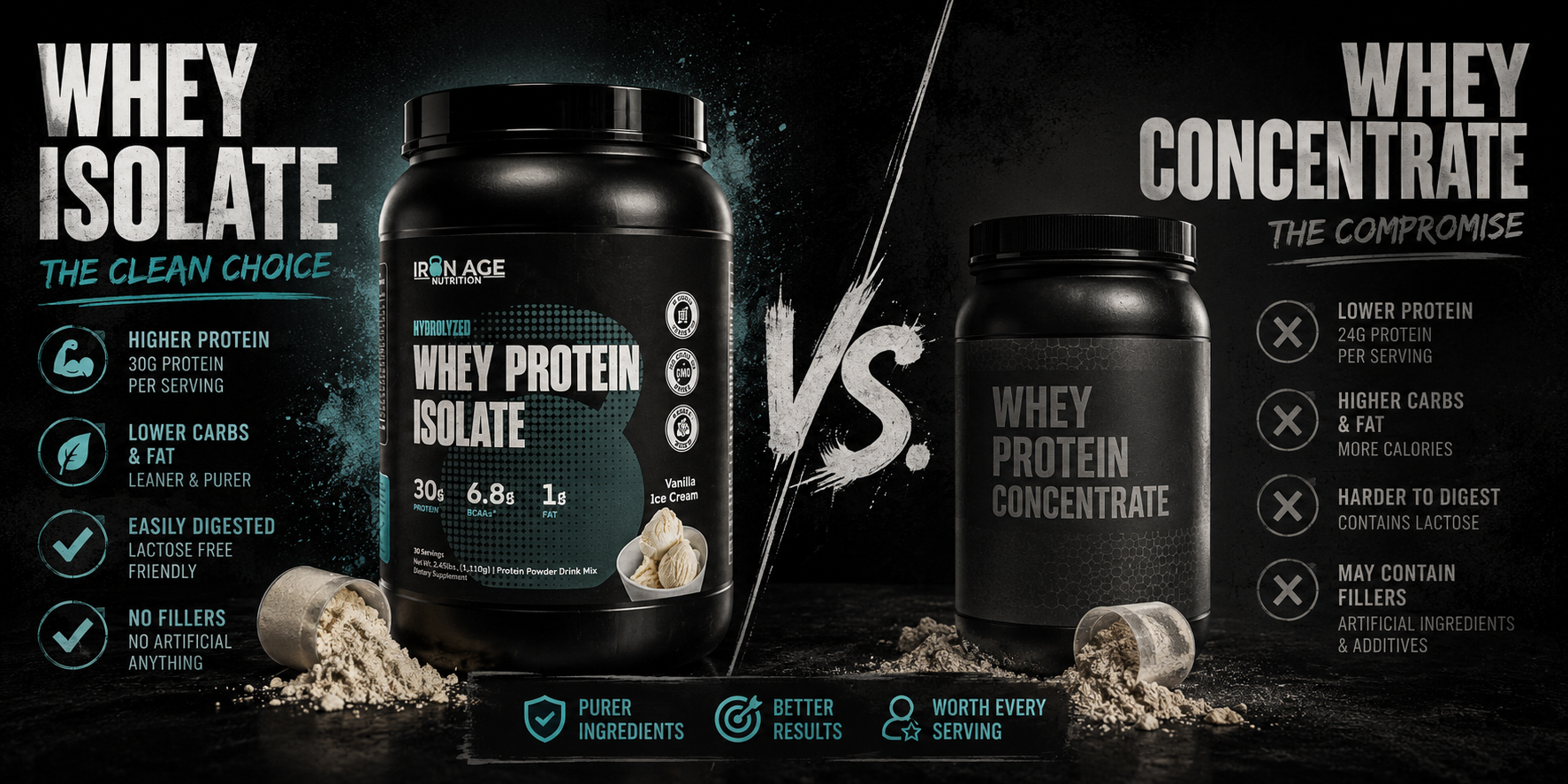
Whey isolate and whey concentrate come from the same milk protein but are filtered to different degrees. Isolate is more processed, landing around 90% protein by weight with very little lactose, fat, or carbs. Concentrate runs roughly 70–80% protein and keeps more of those extras. Isolate suits lactose sensitivity and tight calorie targets; concentrate is cheaper and fine for most people.
Both are complete, high-quality proteins. The right pick comes down to your digestion, your goals, and your budget. Here is the honest breakdown — from a brand that makes both.
How are whey isolate and concentrate made?
Whey starts as a liquid byproduct of cheese production. To turn it into powder, manufacturers filter it — usually by ultrafiltration or microfiltration — to remove water, lactose, and fat while concentrating the protein.
Concentrate stops at an earlier stage of filtration. That leaves more of the original whey intact: more lactose, more fat, more carbs, and beneficial milk fractions. The result is typically 70 to 80% protein by weight.
Isolate goes through additional filtration steps to strip out most of the remaining lactose and fat. That pushes it to around 90% protein by weight. More processing, a purer protein, a higher price per pound. The protein itself is the same whey — isolate simply has less of everything else.
What's the actual difference in protein, lactose, fat, and carbs?
The differences are real but often smaller than the marketing implies. Here is a side-by-side of typical values, including Iron Age's own two products.
| Whey Isolate | Whey Concentrate | |
|---|---|---|
| Protein by weight | ~90% | ~70–80% |
| Protein per serving (Iron Age) | 30 g | 29.5 g |
| Lactose | Very low (virtually lactose free) | Low–moderate |
| Fat & carbs | Minimal | Slightly higher |
| Digestion for sensitive stomachs | Easier | May cause bloating in lactose-sensitive people |
| Iron Age price | $69.99 / 30 servings | $29.99 / 30 servings |
| Typical use case | Lactose sensitivity, lean diets, low-carb targets | Value, everyday shakes, no digestive issues |
Note the protein-per-serving numbers are nearly identical — 30 g vs. 29.5 g. The isolate's advantage is not dramatically more protein per scoop; it is what got removed. You are paying for lower lactose, fat, and carbs, not a big jump in protein.
Is whey isolate actually lactose free?
Not literally zero, but close. Isolate is best described as virtually lactose free — the filtration removes the large majority of lactose, leaving only trace amounts. For most people with mild to moderate lactose sensitivity, that is low enough to avoid the bloating, gas, or discomfort that concentrate can cause.
If you are severely lactose intolerant or allergic to milk, "virtually" still matters — trace lactose is not none, and whey is a dairy protein regardless of processing. But for the large group who feels a little off after regular whey concentrate, isolate is usually the fix.
Who should buy whey isolate?
Choose isolate if any of these describe you:
- You get bloated or gassy from regular whey. Lower lactose is the main reason isolate exists.
- You are cutting or tracking macros tightly. Minimal fat and carbs means nearly all the calories come from protein — easier to fit a lean target.
- You want the cleanest possible per-scoop protein with the fewest extras.
Iron Age Whey Protein Isolate delivers 30 grams of 100% whey isolate per serving with zero fillers and zero artificial sweeteners — no sucralose. It is one clean choice when digestion or a strict calorie budget is the deciding factor. For the full case on why we build it this way, see our guide to whey isolate as clean fuel for recovery.
Who should buy whey concentrate?
Concentrate is the smart pick if:
- You digest dairy fine. No lactose issues means little reason to pay the isolate premium.
- Budget matters. Concentrate costs meaningfully less per serving for nearly the same protein.
- You just want a solid daily protein and are not counting every gram of carbs and fat.
Iron Age Whey Protein Concentrate offers 29.5 grams of protein per serving at $29.99 for 30 servings. It carries slightly more lactose, fat, and carbs than the isolate — that is the trade for the lower price. For most people without digestive sensitivity, it does the same job.
Isolate vs. concentrate: the cost-per-gram math
Price per tub is misleading. What matters is cost per gram of protein — the real unit you are buying.
| Iron Age Isolate | Iron Age Concentrate | |
|---|---|---|
| Price | $69.99 | $29.99 |
| Servings | 30 | 30 |
| Protein per serving | 30 g | 29.5 g |
| Cost per serving | $2.33 | $1.00 |
| Cost per gram of protein | ~$0.078 | ~$0.034 |
Concentrate delivers protein at roughly half the cost per gram. That is the honest math. The isolate premium buys you low lactose and a leaner macro profile — worth it if you need those, not worth it if you don't.
What should you check on any protein label?
The isolate-vs-concentrate choice matters less than buying a product that is actually what it claims. Watch for these on any label:
Amino spiking. Some cheap powders add free amino acids like glycine or taurine to inflate the protein number on nitrogen tests without delivering complete, usable protein. A trustworthy brand tests for actual protein content and can show a certificate of analysis (COA).
Fillers and gums. Long ingredient lists with maltodextrin, thickeners, and bulking agents stretch the product and dilute the protein. Fewer ingredients is usually better.
Artificial sweeteners. Most mainstream whey — Optimum Nutrition, Dymatize ISO100, Ghost — uses sucralose. If you prefer to avoid it, read the sweetener line specifically; "natural flavor" does not tell you what sweetens it.
Protein blends in disguise. A label that says "whey protein blend" often mixes cheaper concentrate into an isolate product. If you are paying for isolate, confirm it is 100% isolate.
Third-party testing. Independent testing and an available COA are the difference between a claim and a verified fact. Ask for it. A brand that has one will share it.
Key takeaways
- Same protein, different filtration. Isolate is ~90% protein; concentrate is ~70–80%.
- The real difference is the extras — isolate has less lactose, fat, and carbs, not much more protein per scoop.
- Isolate = virtually lactose free, ideal for sensitive stomachs and lean diets.
- Concentrate = better value, roughly half the cost per gram of protein, great if you digest dairy fine.
- Judge the label, not just the type: watch for amino spiking, fillers, hidden blends, and sucralose.
- Demand third-party testing and a COA. That is what verifies purity either way.
The honest bottom line
There is no universally "better" whey — there is a better fit for you. If dairy bothers you or you are dieting down, isolate earns its premium. If your stomach handles whey and you want the most protein per dollar, concentrate is the practical choice. We make both because the honest answer is not one product for everyone. Whichever you choose, buy one that is transparent about its ingredients and can back it with testing. That is the standard that actually matters.
Frequently asked questions
Is whey isolate better than concentrate for building muscle?
For muscle building specifically, the difference is minimal. Both deliver complete, high-leucine protein in similar per-serving amounts. Isolate's advantages are lower lactose and fewer calories from fat and carbs — helpful for digestion and cutting, but not a meaningful edge in muscle growth if your total protein is adequate.
Can lactose intolerant people drink whey isolate?
Usually yes, if the intolerance is mild to moderate. Isolate is virtually lactose free, so most sensitive people tolerate it without the bloating concentrate can cause. If you are severely lactose intolerant or have a milk allergy, note that trace lactose remains and whey is still a dairy protein — proceed with caution.
Why is whey isolate more expensive than concentrate?
Isolate goes through extra filtration to remove most of the lactose and fat, which raises production cost and lands it at a higher price per pound. You are paying for a purer, leaner protein — roughly double the cost per gram of protein versus concentrate — not for a large increase in protein itself.
Does whey concentrate cause bloating?
It can, in people who are lactose sensitive, because it retains more lactose than isolate. If regular whey leaves you gassy or bloated, switching to isolate usually resolves it. If you digest dairy without issue, concentrate should not cause problems and offers better value.
What is amino spiking and how do I avoid it?
Amino spiking is adding cheap free amino acids like glycine or taurine to inflate a product's protein number on standard tests without providing complete protein. Avoid it by choosing brands that publish or provide a certificate of analysis (COA) verifying actual protein content, and by favoring short, transparent ingredient lists.
Is there sucralose in Iron Age whey?
No. Iron Age Whey Protein Isolate contains zero artificial sweeteners, including no sucralose — unlike many mainstream options such as Optimum Nutrition, Dymatize ISO100, and Ghost, which use it. Always check the sweetener line on any label, since "natural flavor" alone does not tell you what sweetens a product.
Share:
How Long Does Collagen Take to Work? A Realistic Timeline
How Much Protein Do You Actually Need to Build Muscle?